Skip to content | Accessibility

Projects

Healthy for life

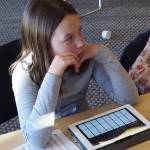
Working with the Birmingham Core Skills Partnership and the Birmingham Teenage Pregnancy Project, CTAD developed a blended learning package which comprises colourful fliers with SMS quizzes, information and guidance on funky, pocket-sized ‘z-cards’, and downloadable materials for Pocket PCs. The materials were designed to provide accessible information and support to 40 pregnant teenagers, including those from ethnic minorities, to address their learning and support needs in a health education context, developing their self-confidence and motivation to learn. Close attention was paid to meeting the target group’s needs, following thorough user analysis, to ensure that only subjects of interest to them were dealt with (i.e. labour and birth, sexually transmitted diseases, nutrition, housing and benefits) using appropriate language and attractive illustrations (photo stories and cartoon graphics).

Maths4Life

Under Maths4Life, a three-year research project led by the NRDC (National Research and Development Centre at the Institute of Education), CTAD explored the extent to which m-learning can motivate and engage learners in numeracy, and whether it can provide an innovative approach to learning. The project, known as ICT in the Engagement of Learners, also looked at the effects of different levels of tutor expertise and confidence in using ICT. A focus group of tutors was selected from a variety of providers across sectors, to test various m-learning materials with their learners. A total of 50 learners were involved between January and April 2005. Maths4Life will help establish best practice for tutors in the most effective use of ICT to engage numeracy learners, inform tutor training and contribute to high-quality, attractive non-specialist mathematics provision for post-16 learners. You can see examples of the work produced by the learners by visiting one of the mediaboards used for this project at http://www.mboard.org.uk and looking for the board called “maths4life”.

Moblogging for ESOL

M-learning for ESOL (English for speakers of other languages) learners was explored in one of a number of ICT trials within the ICT Effective Practice Study by the National Research and Development Centre for Adult Literacy and Numeracy. Ten adult ESOL learners became ‘photo journalists’ for the college open day. They created a photo diary of the event, using camera phones to take photos and sending them, along with a caption, to an e-mail address that automatically published them to a publicly available MoblogUK web site. To prepare for the event, learners looked at published photo stories on the Internet and analysed the language and content to learn about styles and structures that would be useful in writing their own photo diary. The project proved very successful in engaging learners that even the most hesitant member of the class (who was in her 60s and had never used a mobile phone before) and a visually impaired learner, not only took part in it successfully but also found the experience very rewarding. http://www.ioe.ac.uk/hgm/research/SkillsforLife/index.htm

Skills for Life work-based Promotions

CTAD is using mobile phone technologies as an innovative approach to supporting the Skills for Life strategy in the East of England, East Midlands, West Midlands and Yorkshire and Humberside regions. Promotional ‘skillschecks’ in literacy and numeracy (up to Level 2 of the national adult literacy and numeracy standards) are being customised to fit 15 key employment sectors in these regions. Text-based SMS quizzes, phone games and supporting promotional material, such as scratchcards and pocket sized colourful ‘z-cards’, are being developed for ‘hard to reach’ learners - employees who do not recognise that they have a basic skills problem. All these elements can be packaged together to offer a range of tools and activities aimed at both employer engagement in the Skills for Life strategy and at employees who need to improve their skills, either to progress at work or to find employment.

The Virtual Exchange

In one of a number of ICT trials within the ICT Effective Practice Study by the National Research and Development Centre for Adult Literacy and Numeracy, mediaBoard technology, combining camera phones, picture messages and web sites, has linked up ESOL classes in the UK with those in Australia as part of an online partnership between learners. In October 2004, ESOL learners in Australia and England 'met' each other online, working together over the course of two terms, on a series of online projects to develop their English and ICT skills. A vast array of nationalities were brought together via this new technology, sharing experiences and finding out about each others’ backgrounds. The ease and speed with which messages can be posted, coupled with the undeniably fun nature of the exchange, has fostered a genuine enthusiasm to use and improve their English. http://www.ioe.ac.uk/hgm/research/SkillsforLife/index.htm

m-learning for work-based learning: Care, Cleaning and Logistics

The Government has a major commitment to promoting learning in the workplace, where there is often very little technology that can support conventional e-learning. PDAs and more sophisticated handsets with multimedia capabilities are a much more satisfactory solution than having a fixed workstation. CTAD is working with several colleges and workplace providers as part of an ESF project to bring m-learning to these groups. Learners will be given PDAs or handsets with relevant content already loaded for them to use within a structured, blended learning process that includes face-to-face, phone and text-based and online tutor support. Numbers to be targeted: 1500!


This site was created and is maintained by ULTRALAB and CTAD - © 2005